Role of New Technology and Multiliteracies
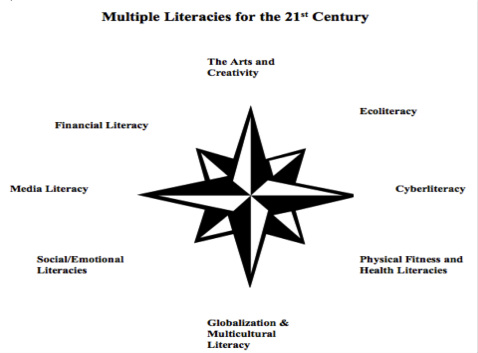
To the left are the multiliteracies for the 21st century.
The role of these multiliteracies and technology in today’s society play an important part of a learner’s education. The way these learners respond to the world is changing, due to the introduction of technology and processes such as social networking and online connectedness. New technology has many positives and can further the understanding of many of the multiliteracies. It can provide many resources, information and knowledge that were not as readily available in the past. Students can now access whatever information on the Internet they want, whenever they want. This improves their grades and
capabilities, and therefore the role of these new technologies in the classroom is growing.
Both learners and teachers rely on multiliteracies in their day-to-day lives to communicate and present their ideas. The role of technology has influenced this as it has given a new base to expand in their knowledge. For example media and cyber literacy would not be nearly as developed if it were not for the technologies focused around the Internet and the online communities. And again, how we respond to and understand eco literacy, and globalization and multicultural literacy would not be as advanced if technology and the multiliteracies did not work together to help educate.
The role of these multiliteracies and technology in today’s society play an important part of a learner’s education. The way these learners respond to the world is changing, due to the introduction of technology and processes such as social networking and online connectedness. New technology has many positives and can further the understanding of many of the multiliteracies. It can provide many resources, information and knowledge that were not as readily available in the past. Students can now access whatever information on the Internet they want, whenever they want. This improves their grades and
capabilities, and therefore the role of these new technologies in the classroom is growing.
Both learners and teachers rely on multiliteracies in their day-to-day lives to communicate and present their ideas. The role of technology has influenced this as it has given a new base to expand in their knowledge. For example media and cyber literacy would not be nearly as developed if it were not for the technologies focused around the Internet and the online communities. And again, how we respond to and understand eco literacy, and globalization and multicultural literacy would not be as advanced if technology and the multiliteracies did not work together to help educate.
If we look at Media literacy, the key learning ideas are:
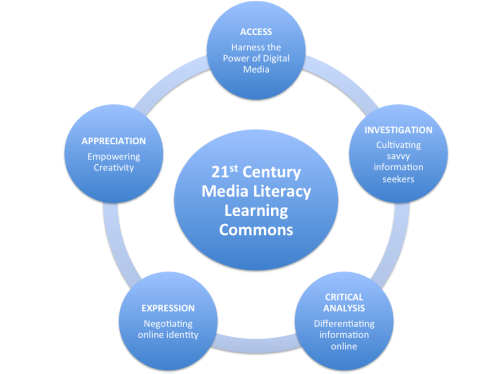
These are all based around technology. This shows how influential a role new technology plays on the development of multiliteracies and as a result, the education system.
